Purpose Glomangiomas of the spine are exceptionally rare benign vascular tumors, frequently misdiagnosed as more common lesions such as schwannomas or meningiomas. Although most spinal glomangiomas exhibit benign behavior, the presence of a BRAF V600E mutations may indicate uncertain malignant potential. Accurate diagnosis and complete surgical excision are essential for favorable outcomes.
Methods A 43-year-old male with left flank pain was evaluated with thoracic MRI and underwent surgical resection. Histopathological and molecular analyses were performed.
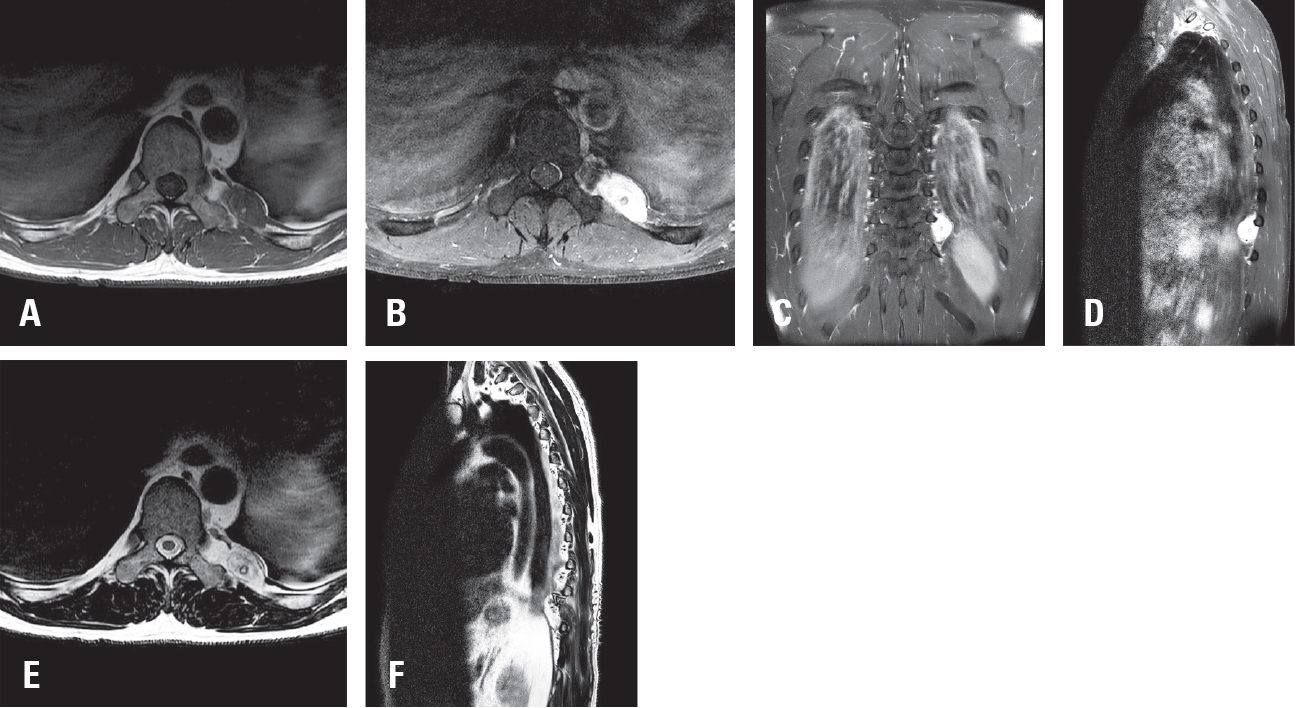
Results Thoracic magnetic resonance imaging (MRI) revealed a 2.8 cm ovoid, hypervascular mass adjacent to left T10 transverse process, extending to the posterior hemithorax. Surgical resection was performed, and histopathological examination confirmed a glomangioma with positive smooth muscle actin (SMA) expression and a BRAF V600E mutation.
Conclusions This case highlights the diagnostic challenge posed by paraspinal glomangiomas and emphasizes the importance of histopathological and molecular analysis in establishing the correct diagnosis. A review of the literature demonstrates that complete surgical excision remains the treatment of choice, with excellent prognosis. The identification of BRAF mutations may warrant closer follow up.
Objective Peridural fibrosis may cause failed back syndrome and the presence of fibrosis renders reoperations risky.
Therefore, preventing the adhesion of scar tissue to the dura and nerve root is one of the issues in spinal surgery.
Thus, the purpose of this study is to evaluate and compare the efficacy and the safety between two anti-adhesive agents, BNCH-202 (Korea BNC Inc, Daegu, Korea) and Guardix-SOL (Hanmi, Seoul, Korea).
Methods Sixty eight patients were enrolled in this study. To evaluate and compare the efficacy in preventing epidural adhesion formation and the safety in human laminotomy models, the two barriers tested were either BNCH-202 or Guardix-SOL (gel/film combination). Clinical evaluation was performed at 0, 6 and 12 weeks to assess pain and functional outcome. The patients were also assessed radiographically with postoperative magnetic resonance imaging (MRI) to evaluate the presence of perinueral scar and adhesion.
Results There was no statistically significant difference between two biologic barriers in terms of the safety issue, clinical and radiological efficacy. There were no significant differences between the BNCH-202 group and the control group on the preoperative ODI and VAS scores. In general, the ODI and VAS scores decreased in both groups at all the time points. At the 6 week and 12 week time point, the VAS scores for back pain/ leg pain and the ODI scores in both groups were lower than the preoperative score in each group (P<0.01). And at the 12-week time point, the peridural scar scores were assessed in both groups. The mean value of the peridural scar score in BNCH-202 group was not inferior to the mean value of that in Guardix-SOL group.
Conclusion The results demonstrated that BNCH-202 gel is as effective as Guardix-SOL in reducing posterior dural adhesions in the spine with no apparent safety issues. It can improve patients’ postoperative clinical outcome.


 First
First Prev
Prev