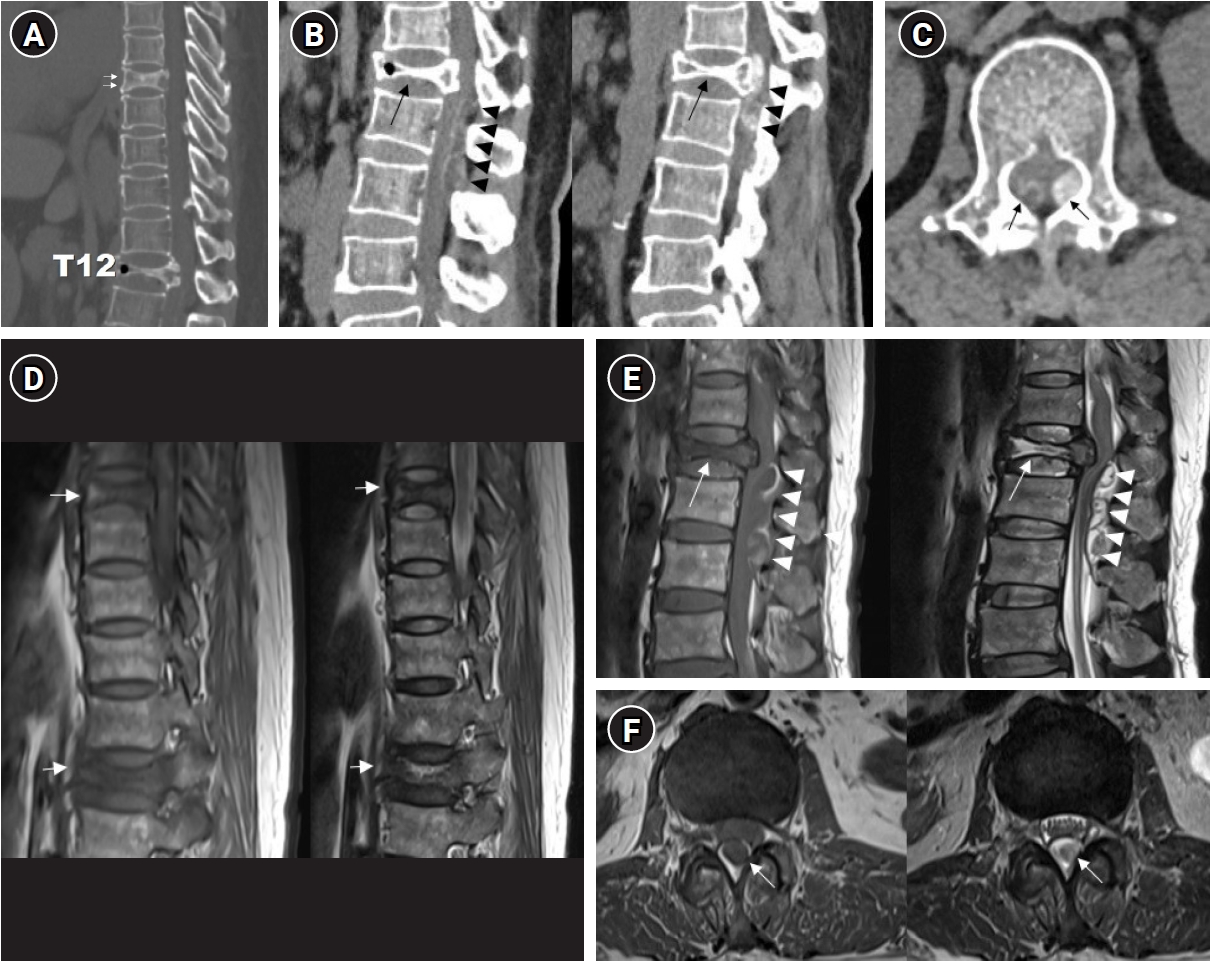
The incidence of compression fractures is increasing in aging populations. Differentiating pathological fracture types is complex and requires careful consideration during diagnosis. This case report describes the clinical course of a 54-year-old female patient presenting with progressive paraplegia after a back injury sustained while lifting a heavy object. Initial imaging revealed a burst fracture at T12 and severe spinal cord compression due to an epidural mass extending from T12 to L2. Clinical assessment raised suspicions of a hematologic malignancy or pathological fractures. Laminectomy and spinal fusion, along with mass removal, resulted in partial improvement in motor function and patient-reported pain levels. However, further evaluation and biopsy revealed chronic inflammation with fibrosis consistent with an unresolved hematoma. This case underscores the importance of a comprehensive differential diagnosis and multidisciplinary collaboration, integrating radiologic, surgical, and pathologic correlation, in the management of complex spinal pathologies.
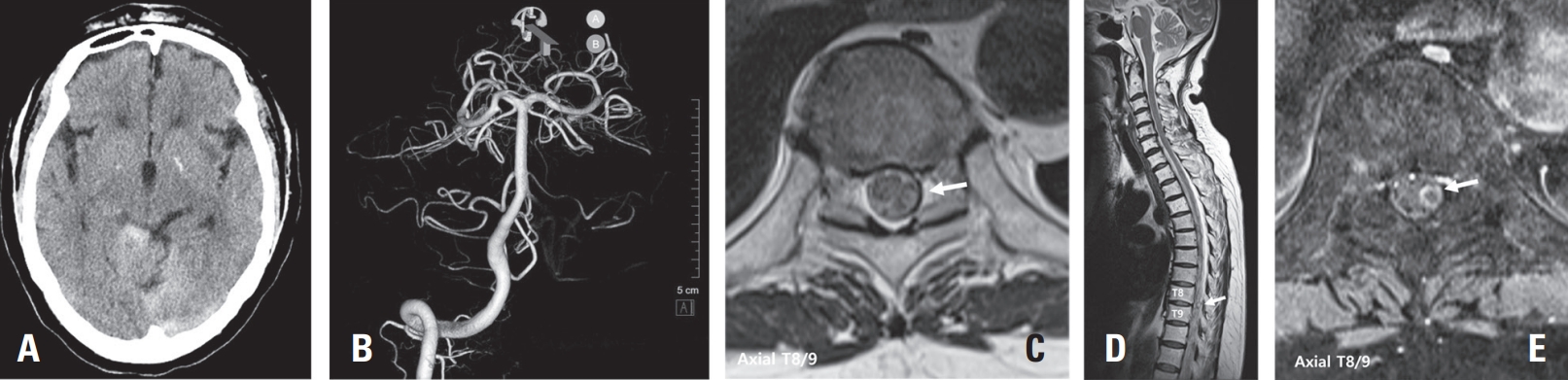
Spinal artery aneurysms are exceedingly rare, and their natural history remains poorly understood. Diagnosis can be challenging due to their small size and the difficulty in detection by MR angiography (MRA) or CT angiography (CTA); Digital Subtraction Angiography (DSA) is considered the gold standard diagnostic tool. This case report presents two cases of ruptured thoracic radicular artery aneurysms leading to subdural hematoma (SDH) and subarachnoid hemorrhage (SAH). The first patient, a 71-year-old female, presented with bilateral leg weakness, headache, and severe back pain, where multiple fusiform dilatations of the left T9 radiculopial artery were identified. She showed significant improvement after surgical intervention. The second patient, a 75-year-old female, presented with paraplegia and severe back pain, and a saccular dilatation in the right T10 radiculopial artery was found. She underwent endovascular embolization but showed no neurological improvement. These cases highlight the diverse clinical presentations, diagnostic challenges, and uncertainties in management strategies for ruptured spinal artery aneurysms, emphasizing the need for prompt intervention, especially in cases with significant or progressive neurological deficits.
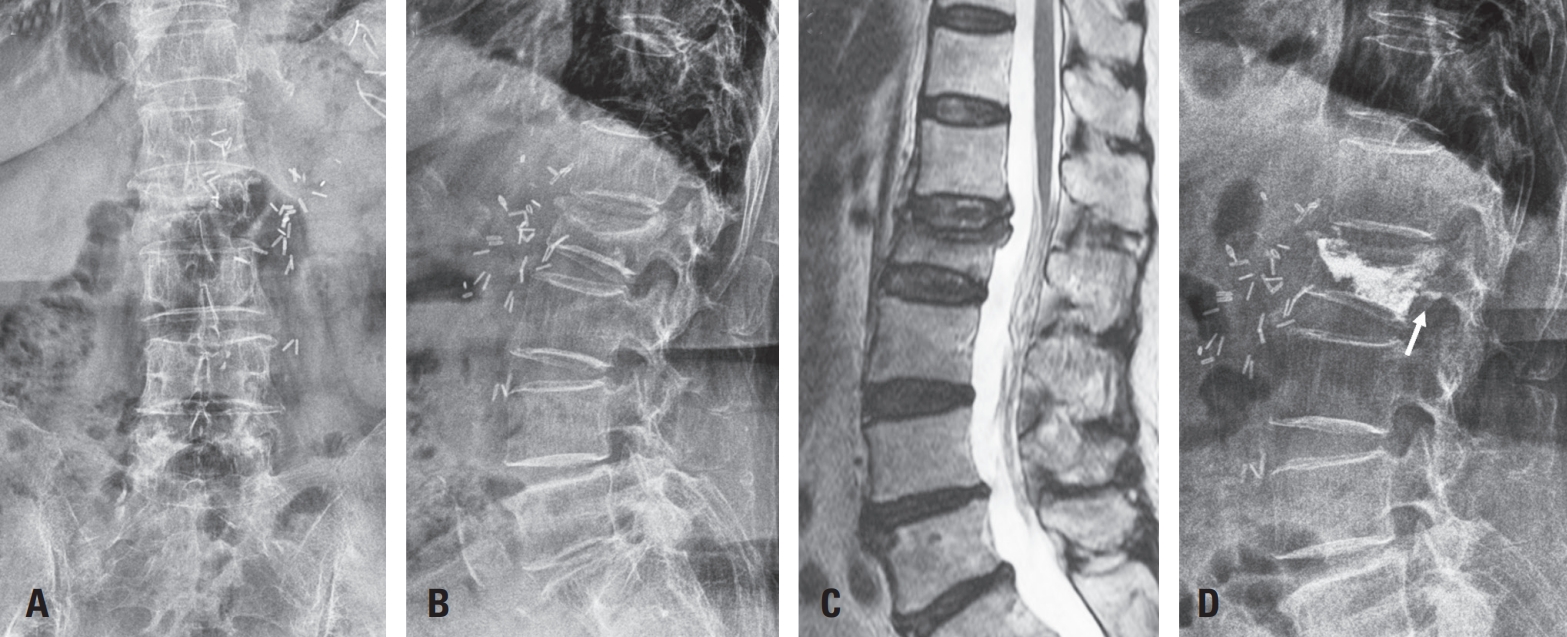
Vertebroplasty or kyphoplasty is a widely accepted minimally invasive procedure for treating painful vertebral compression fractures. Although considered safe, rare but serious complications such as spinal subdural hematoma (SDH) can occur, particularly in patients receiving long-term anticoagulation therapy. We present a rare case of spinal SDH following kyphoplasty in a 78-year-old woman with a mechanical aortic valve on chronic warfarin therapy. Anticoagulation was managed perioperatively with warfarin discontinuation and bridging enoxaparin. Postoperative X-ray showed subtle posterior cement leakage. MRI on postoperative day 1 revealed lumbar SDH, which progressed cranially by day 2. The patient remained neurologically intact and was treated conservatively with corticosteroids and temporary suspension of anticoagulation. Follow-up imaging showed gradual hematoma resolution, and she was discharged without deficits. This case suggests the importance of maintaining a high index of suspicion for spinal hematoma in anticoagulated patients, especially when new symptoms or even minor cement leakage are present. Careful perioperative planning, including early imaging and multidisciplinary management, is crucial in such high-risk patients.
Spinal subdural hematoma (SDH) is a rare complication after spinal surgery. Only a few cases are reported on spinal SDH following open lumbar spinal decompression or fusion surgery. Moreover, there has been no case report on spinal SDH following percutaneous transforaminal endoscopic lumbar discectomy. We report a case of spinal SDH following endoscopic discectomy, review the literature of this complication and discuss the etiology to it and methods to prevent it. A 63-year-old woman presented with severe radiating pain. Pain was not improved with conservative management. Lumbar magnetic resonance imaging (MRI) was checked and revealed right L3-4 ruptured disc with severe L4 root compression. Percutaneous transforaminal endoscopic decompression was performed and the pain subsided promptly after the endoscopic procedure. On 7th post-operative day, pain on Rt. buttock, anterior thigh was deteriorated severely, more than in pre-operatively. Deteriorated pain was not controlled by oral medications and epidural block. Repeat MRI showed no definite recurrence of disc herniation at decompressed level but spinal SDH, severely compressing cauda equina was seen on T12-sacral area. Spinal SDH is a rare complication following spine surgery, including percutaneous endoscopic surgery. A spine surgeon should be aware of the possibility of spinal subdural hematoma, having severe sequel.
Objectives To verify the hypothesis that nerve compression by postoperative spinal epidural hematoma (POSEH) can be reduced by instillation of heparin through suction drains.
Materials and Methods The patients who underwent posterior decompression and instrumentation between Jan. 2016 and Jun 2016 were allocated to study (using heparin) group and control group according to the operation date alternately. There were 61 cases in study group and 60 cases in control group. Two lines of suction drain were used in all cases. Thousand unit of heparin and 5ml of normal saline were instilled through the drain lines into the epidural space just before the wound closure. To prove the homogeneity between the two groups, demographic, patient related, operation related and clotting related data were compared. At day 7 after the operation, their MRIs were examined. The area of thecal sac was measured at the T2 weighted axial image that showed the maximal compression of the thecal sac by epidural hematoma. Two orthopedic doctors who were blinded to this study measured independently and the average values of the two were counted as final measured values.
Results The two groups were homogenous in age, sex, number of fusion segments, whether virgin or revision operation, total blood loss, operation time, blood loss/10 min, whether taking anti-platelet drugs or not, platelet count, PT, aPTT and platelet function analysis. The smallest area of thecal sac in axial MRI was 124.4±49.9 mm2 in study group and 121.7±47.4 mm2 in control group. There was no significant difference (p=0.761)
Conclusions In a posterior spine surgery, thecal sac compression by POSEH was not reduced by instillation of heparin into the epidural space.
A 45 year-old male was brought to our hospital with severe back pain and motor, sensory impairment in both lower extremities. He had no underlying diseases including coagulapathy. Motor weakness below both hip joint and decreased sensory below T12 dermatome, voiding dysfunction were examined. The MRI showed a spinal subdural hematoma at the thoracolumbar region, which was extremely rare. Medical treatment was applied without surgical interventions. After two weeks, motor weakness, sensory impairment, and voiding dysfunction were improved. And he returned to his daily activities. We present this case and literature reviews because traumatic spinal subdural hematoma is an extremely rare disease and the condition was treated successfully in conservative manner.


 First
First Prev
Prev